

For years I taught an intensive five-day, fifty-hour course in Interpersonal Communication. It was a powerful course and I would put my whole heart and soul into the course, doing everything I could to help the participants make quantum leaps forward in their personal and professional development.
Indeed, the course was so powerful and popular that there was a three-year waiting list to get into this highly interactive class.
Once in a while, however, a student would show up for the Interpersonal Communication Class who did not appear as though he or she wanted to be there. They would not get involved.
That’s when my judgmental side came out. And all the problems associated with that.
► 1. Being judgmental closes the door to productive relationships.

When I saw a student refuse to get involved, I would “I’m giving you everything I’ve got. I’m giving my very best. So student, get with it!”
That’s what I was thinking about Steve. When he entered my class, he was about 28 years of age and he looked like my stereotype of a “jock.” He was a big, strong, muscular-looking guy, who appeared a bit arrogant, superior, aloof, or too “cool” to participate in the various communication exercises that everyone else was.
I got even more judgmental. In my head I began to think, “There’s a three-year waiting list of people who want to be in this class, so don’t take their spot. Get involved, Steve, or get out!” Of course, I didn’t say any of those things, but that’s what I was thinking — until the fourth day of the five-day class.
Steve opened up and made his first comment. He said when he was back in grade school, he was the puniest, weakest kid there. He was constantly picked on and teased by the other kids, so, of course, he avoided them as much as possible.
Steve continued. He said he got so sick of being picked on, he began working out on weights, an hour a day, several days a week. In fact, he followed the regimen for years and continued to follow it. Unfortunately, the regimen had taken so much of his time that he never had much time left over for people or to learn people skills.
Suddenly it dawned on me. Steve wasn’t acting cool and aloof. His lack of class participation wasn’t due to some supposed arrogance that I had imagined. For heaven’s sake, Steve was simply unskilled and shy.
Until I understood where he was coming from, I wasn’t very effective as his teacher. I wasn’t modeling the warmth, acceptance, and encouragement he needed. I had judged him, found him lacking, and dismissed him.
Earlier I said being judgmental closes the door to productive relationships. Initially that was the case with Steve and me. He came to the Interpersonal Communication Class looking for a teacher or a coach who would give him the people skills he needed. But he got a judge instead.
Do you ever do that? Do ever judge or pre-judge someone so much that you close the door to a more positive relationship? Probably so.
Then please, once you know that about yourself, take the advice I give my coaching clients,
“Exercise caution in judgment but never in understanding.”
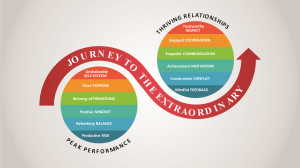
It’s one of the dozens of communication skills you’ll learn in my totally updated version of that original Interpersonal Communication Class. Today I call it the Journey-to-the-Extraordinary experience.
It’s a two-day, sixteen-hour virtual class, that I offer once a year. The next one will be this October 3-4, 2024, from 9 am to 6 pm Eastern Time. We have fewer than 10 seats left and I would urge you to grab one of those seats. The understanding and skills you get will blow your mind and re-empower your personal and professional lives.
Listen to Patrick Skowron who attended my last Journey-to-the-Extraordinary experience and the understanding he got.
“Over the years of I’ve read many self-improvement books and attended many motivational seminars by some well-known speakers. But your ‘Journey’ pulled it all together and took me to a much higher level of understanding. This has enabled me to really go after my goals … in a successful, well-planned way … using a methodology I never knew existed.
“I am amazed and impressed with all the tools I acquired at the ‘Journey’ and somewhat saddened by all the details left out of all the other programs I’ve attended. But those little details on how the mind works and how you can guarantee your goal achievement have made a Significant Difference in my life and work.
“I even shared what I learned with my adult sons, and they were wide-eyed when I showed them what I learned in class. Now they UNDERSTAND, just like I do, that you can achieve your goals if you have the right tools to use.

“I am so glad and thankful I met Dr. Zimmerman. Everyone in the ‘Journey’ left with a higher level of understanding … a level which few people ever experience in their lifetime! Even though times are difficult, it makes more sense to attend the ‘Journey’ now than ever before. In addition to being a lot of fun, mentally stimulating and very real, this program will change your life!”
Did you notice that Patrick got a level of understanding that changed his life?
That takes me back to my original question. Are you more understanding or judgmental?
If you want to increase your understanding, you need to
► 2. Be aware of the seductive nature of judgementalism.
You see, judgment is easy. It just takes a split second to form an impression of someone, stereotype someone, or judge someone. It’s quick, almost automatic, and unconsciously completed. It doesn’t take any thought, work, or discernment. But once you’ve passed judgment on someone, it’s mighty easy to keep on seeing that person in the same light, no matter what they say or do.
That’s the seductive but destructive nature of judgementalism. It can even make you feel a bit more powerful, cool, or better than the other person … none of which will make any of your relationships any better. It’s a little devilish.
►3. Adopt the humble seeking-to-understand attitude of “I don’t know everything”
IBy contrast to judgmentalism, understanding requires a humble posture. An Emotionally Intelligent person is humble enough to admit, “I don’t know everything. I seldom have enough data to play God and pass judgment on someone else.”
When you adopt a humble, seeking-to-understand attitude, you will find that as you learn more information about another person, as you learn their story, and as you get a fuller understanding of that person, your judgment decreases.
That doesn’t mean that you will always like or agree with the other person, but your increased understanding builds a bridge to a better, more cooperative relationship. And that’s always a good thing.
Of course, understanding takes work and skill. I hope you’ll join me on October 3-4, 2024 in my Journey-to-the-Extraordinary class where you’ll learn all that and so much more..