

3rd Biggest MOTIVATION MYTH you need to eliminate
In my last Tuesday Tip, I outlined TWO MOTIVATION MYTHS that are contributing to the abysmal state of workplace motivation these days. The comedian George Carlin might have summarized it best when he said, “Most people work just hard enough to not get fired and get paid just enough money not to quit.”
There’s another MOTIVATION MYTH that may be leading you astray and killing off your relationship effectiveness at home or on the job. And that is…

► MOTIVATION MYTH #3: “You can motivate others with negative feedback.”
There are people out there who talk about using “reverse psychology”. Some bosses seem to think that praise, encouragement, and recognition will make their employees big-headed and lazy. So they take the approach that nothing is ever good enough.
Once after finishing speaking at IBM, the manager invited me to join him as an observer when he and his sales team met in a private session. During the meeting, the manager stood looking at a map with colored pins, each one representing a different salesperson in charge of that territory. He turned to Sherman, a very successful salesman, and said, “I’m not going to fire you, Sherman, but I’m loosening your pin a bit just to emphasize the insecurity of your situation.”
Sherman got nervous, was humiliated, and was far from feeling encouraged. Smart strategy on the manager’s part? I don’t think so.
Let me tell you that the research clearly says that most of the time negative feedback does NOT motivate the best in people. Most of the time “reverse psychology” backfires. And like any fire, you’ve got to be mighty careful that you and other person don’t get burnt.
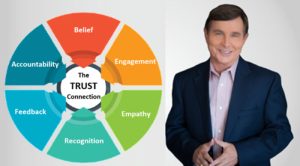
It’s one of the skills I teach in my upcoming virtual program called THE TRUST CONNECTION: How to Build Stronger, Empathic, Engaged Relationships. It runs for three consecutive Thursday mornings, starting May 22 through June 5.
Mark Bowles, a manager at Entergy, learned how to do it. He says, “I used your positive feedback techniques from THE TRUST CONNECTION to motivate employees. And now all of my employees are HIGH performers. It’s so rewarding.”
Register now and bring a second person along free of charge
Some parents seem to think that praising their kids or expressing admiration of their kids will make them soft. So they also take the approach that nothing is ever good enough, hoping their kids, in return, will take an attitude of “I’ll show you.”
In one of my Mayo Clinic seminars, Maria, one of the participants, said her mother took that approach. Her mother was heavy on the criticism and light on the praise. Maria said that motivated her … to some extent. She said she worked and worked for several years to do well in her classes at the university. In fact, she did so well that she made it into a highly prestigious honor society.
But her mother said, “I used to think it was a big deal to make Phi Beta Kappa — until you got it.” And once again, Maria said she got knocked back to zero, felt demotivated, and thought, “Why bother?” She has struggled with keeping her motivation consistently high ever since.
While speaking at a construction company, Jonathan reported a similar story. He said that his parents’ approach to motivation was also “nothing is ever good enough.” He said if he took out the garbage, his mother would tell him, “It’s about time you helped around the house.” If he got all A’s and one B on his report card, his father would ask, “What did you do wrong to get the B?”
The result? Instead of firing up his motivation, Jonathan said his parents’ remarks gave him a lifetime of self-doubt.
Jonathan continued. He said as a little child he really tried to please his Dad, to get his Dad’s recognition. So one time he tried to keep his shoes in shape so they lasted a record six months. When he proudly showed them to his father, instead of praising him, his father pulled out a pair of shoes he bought 20 years before and said, “Beat that.”
The message Jonathan got? No matter how much you win, you still lose.
The key question for today: How effective is negative motivation or reverse psychology?
The answer: It can work sometimes, but it’s risky, unreliable, and usually damaging long-term.
Let me explain.
-
Negative motivation has only short-term effectiveness
Negative motivation like “you could never do that” can spark a temporary surge of motivation in some people. Especially those with strong self-confidence, a chip on their shoulder, or a deep desire to prove others wrong.
Note the words temporary surge of motivation. In other words, negative motivation can fire some people up, for a while. I refer you to the examples of Maria and Jonathan I outlined above.
What tends to happen after this temporary surge is a bunch of big, longer-lasting downsides, including:
-
- Lower intrinsic motivation (people are motivated by anger, not love of the work)
- Increased stress and anxiety
- Lower self-esteem (especially if the person already doubts themselves)
- Damaged trust between leader and employee (people don’t forget being insulted)
- Higher burnout and turnover over time
Obviously you don’t want any of those things in your workplace. That’s the danger of negative motivation.
-
Negative motivation only works on a few people
It only works on people who are naturally competitive, rebellious, or highly self-driven. Only 10% of the people in the world can thrive on an “I’ll-prove-you-wrong” energy. The other 90% tend to believe the negative things being said about them and downgrade their performance accordingly.
The tricky part is you don’t always know which category people fall into. You don’t know who will respond with super-charged enthusiasm and who will shut down. That’s why negative motivation is very unpredictable.
Of course, we’re all familiar with some superheroes who excelled with criticism, but they’re few and far between, like Tom Brady. Brady was picked 199th in the NFL draft. He was almost an afterthought. The scouts said he was too slow, too weak, not athletic enough.
The result? Over the years, Brady talked a lot about how he internalized all that criticism and used it as a constant chip on his shoulder to become the most decorated quarterback in NFL history.
But like I said, there are very few Tom Brady types around. Employee disengagement studies show that most people fall into that 90% category where negative motivation does not work.
Research from Gallup and others shows that employees who feel unappreciated or belittled are far more likely to quit. Or “quiet quit,” where they stay at a job but do the bare minimum.
My take-away advice: “While a few legendary performers have turned criticism into fuel, most people don’t need to be doubted to do great work — they need to be believed in.”
|
