

2 Top Motivation Myths Get Debunked Here and Now!
|


► MOTIVATION MYTH #1: “You can’t motivate others.”
You’ve heard people say … and maybe you’ve even been taught by some misguided teacher, consultant, or boss, that “you can’t motivate anyone”.
It sounds profound because it taps into the truth that people ultimately control their own actions — but it’s actually a half-truth.
You see, motivation comes in two types:
-
Intrinsic (coming from inside the person — passion, purpose, curiosity).
-
Extrinsic (sparked by outside influences — praise, rewards, environment, social pressure).
You can’t force intrinsic motivation, but you absolutely can fire up motivation by creating the right conditions, incentives, and emotional environment.
And when you think about it, you know that’s true. You CAN motivate others.
You know that from your own experience. You’ve had a teacher that inspired you to work harder than you ever thought possible. You’ve seen the right coach with the right approach push a mediocre team to more victories than ever before. You’ve worked for a leader … hopefully … that got you and your team fired up about a vision. And you’ve even had a good friend motivate you to make a life change.
So DO NOT buy into the myth that “you can’t motivate others.” There’s always something you can do to bring out the best in others. That thought alone will empower you.
Mark Bowles from Entergy learned that at my class on THE TRUST CONNECTION. He says: “I used your positive feedback techniques to motivate employees. And now all of my employees are HIGH performers. It’s so rewarding.”
Tracy Walker from State Farm learned that at my class on THE TRUST CONNECTION. She says: “Your TRUST class worked so well that I expanded my team, hired more people, and we’re all having great success using your motivation techniques. I even taught your techniques to my 7-year-old son, and his reading and self-esteem improved as a result.”
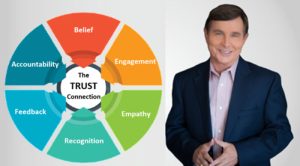
Join THE TRUST CONNECTION virtual program being offered for three consecutive Thursday mornings … May 22, May 29, and June 5, 2025. Register now and bring a second person along free of charge.
Now that we’ve debunked Motivation Myth #1, let’s look at …
► 2. MOTIVATION MYTH #2: “I don’t have to praise people for doing their job. That’s what they’re paid to do.”
One could argue that that myth is technically true. You don’t have to praise your employees or anyone else for that matter. But let’s get right to the bottom line. People will work harder and accomplish more with a paycheck and praise than they will with just a plain old paycheck.
The same is true with your coworkers, partner, or kids. You don’t have to praise them, but you’ll get an awful lot more cooperation from them when you do it … correctly.
Study after study verifies this. When National Underwriters surveyed 200 of their managers, recognition for a job well done out-rated money and challenge as top motivators.
In a Wichita State University survey, employees rated a manager’s thanks as the most motivational incentive of all. Unfortunately, 58% of the employees said they rarely received a personal thank you.
The Society for Human Resource Management (SHRM) and Globoforce Survey concluded: “79% of employees say recognition makes them work harder. 89% say it makes them more loyal to the organization.”
The Families and Work Institute has conducted several studies, examining what works in today’s business climate with different generations and different work ethics. They concluded that employees of any generation are willing to work hard if there is:
-
recognition for achievement,
-
listening by the manager,
-
balance between work and family, and
-
opportunity for training.
Please note, recognition or praise came out as the number one motivator.
Going back to Motivation Myth #2, no, you don’t have to praise people for doing their job. But you would have to be mighty stupid to ignore all the research that says you had better do it.
The fact is, proper praise and recognition motivates the best in others. And people never outgrow the need for it.
The comedian George Burns illustrated that when he received an honorary doctoral degree from the University of Hartford at age 92. He said, “I can’t wait to run home and tell my mother about this. She always wanted me to be a doctor.”
|
